
Brand Activation & Experiential Marketing: How Immersive Brand Experiences Drive Engagement, Customer Loyalty & Business Growth
How Brand Activation & Experiential Marketing Turn Brands Into Memorable Experiences
Brand activation and experiential marketing have become powerful ways for businesses to move beyond traditional advertising and create meaningful connections with their audiences. Instead of simply telling customers what a brand offers, experiential campaigns allow people to see, experience, interact with, and remember the brand in real-world environments.
From product launches and corporate events to exhibitions, trade shows, immersive installations, roadshows, retail experiences, conferences, and large-scale brand activations, successful experiential marketing combines strategy, creativity, production, technology, storytelling, and audience engagement to create measurable business impact.

Brand Activation in Kolkata: A Complete Guide to BTL, Experiential Marketing & On-Ground Campaigns
Brand activation is a marketing strategy designed to create direct interaction between a brand and its target audience. Unlike conventional advertising, where audiences primarily receive a message, brand activation encourages people to participate in an experience that brings the brand to life.
A brand activation campaign can take many forms, including product launches, experiential installations, corporate events, retail activations, roadshows, sampling campaigns, exhibition experiences, interactive displays, celebrity-led experiences, technology-driven installations, and social media-integrated events.
The objective is not simply to organize an event. A professionally designed brand activation connects the physical experience with the brand's positioning, marketing objectives, customer journey, and desired business outcome.
Common Brand Activation Formats
- Product launches and product demonstration experiences
- Corporate brand activations and business events
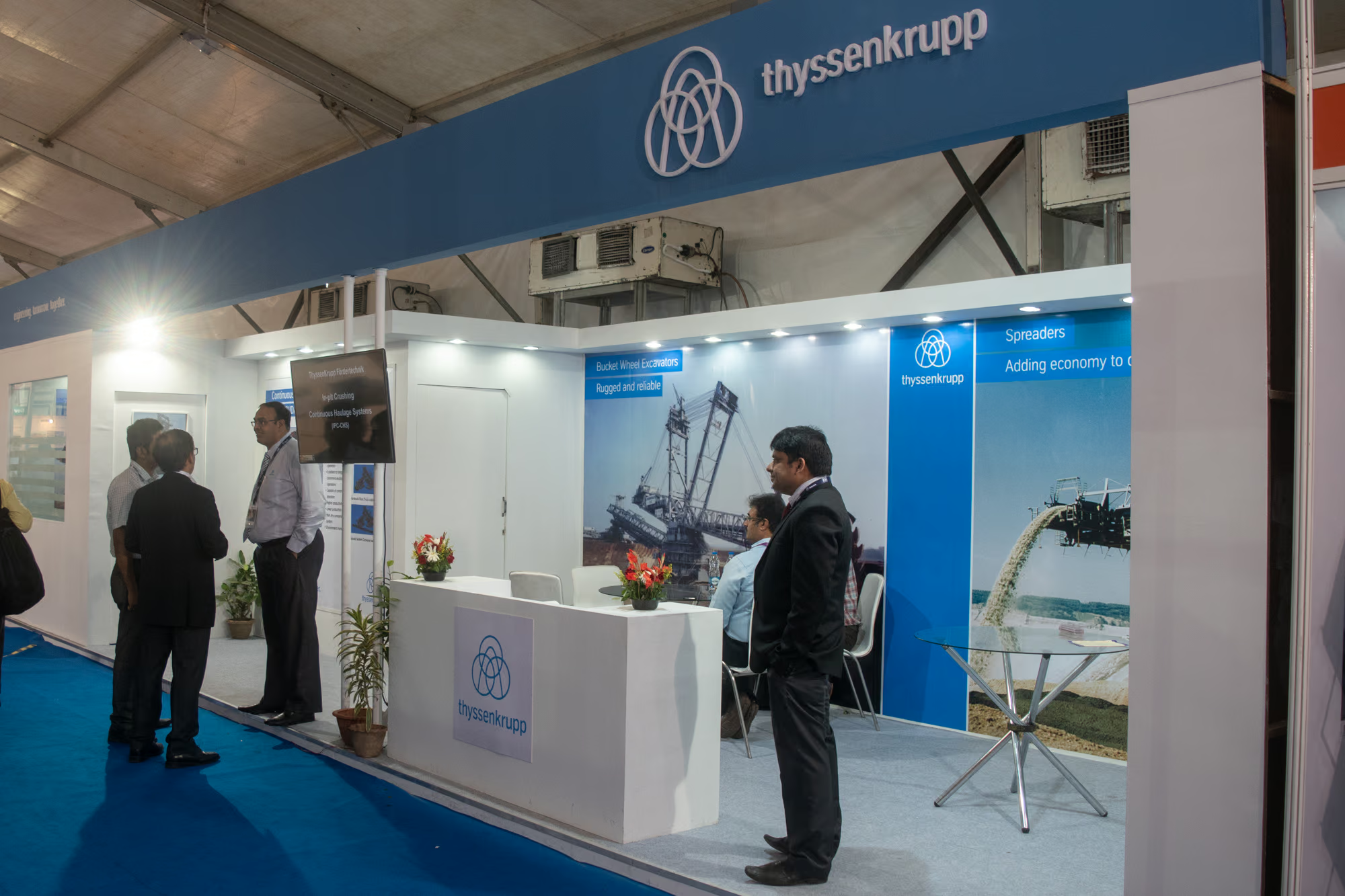
- Exhibitions and trade show experiences
- Retail and mall activations
- Roadshows and city-wide promotional campaigns
- Immersive and interactive brand installations
- Experiential marketing campaigns
- Conference and customer engagement experiences
- Technology-enabled brand experiences
- Social media and content-driven activations
What Is Experiential Marketing?
Experiential marketing focuses on creating memorable interactions between people and brands. The experience can involve sight, sound, touch, movement, participation, entertainment, technology, storytelling, or personal interaction.
The strongest experiential marketing campaigns are designed around a simple principle: people are more likely to remember a brand when they actively experience it rather than passively consume an advertisement.
This makes experiential marketing particularly valuable for brands launching new products, entering new markets, strengthening customer relationships, building brand awareness, or creating differentiated experiences in competitive industries.

Step 1: Brand Discovery & Marketing Objectives
Every successful brand activation begins with understanding the brand. Before designing a stage, exhibition booth, installation, product experience, or event environment, the creative team must understand the company's positioning, audience, products, competitors, campaign objectives, and communication priorities.
This discovery stage determines what the experience needs to achieve. The objective may be generating leads, launching a product, increasing awareness, strengthening relationships with customers, creating social content, educating audiences, generating media attention, or driving direct sales.
Key Questions Before Creating a Brand Activation
- What is the primary business objective?
- Who is the target audience?
- What should people understand about the brand?
- What should visitors feel or remember?
- What action should the audience take?
- Where will the activation take place?
- How will audience engagement be measured?
- How can the experience generate content beyond the physical event?
Step 2: Audience Research & Experience Design
An experiential campaign is only effective when the experience is relevant to the people attending it. Audience research helps identify customer expectations, preferences, behaviour, motivations, demographics, cultural context, and purchase considerations.
These insights influence everything from the campaign concept and location to event flow, messaging, entertainment, technology, interaction points, product demonstrations, hospitality, and content creation.
The goal is to design an experience that feels natural and engaging rather than forcing a marketing message onto an audience.
Step 3: Big Idea & Creative Concept Development
Once the strategic foundation is established, creative teams develop the central idea that will define the activation. This concept becomes the creative thread connecting the venue, environment, visual identity, storytelling, interactions, technology, entertainment, content, and audience journey.
A strong experiential concept should be distinctive enough to attract attention while remaining relevant to the brand. It should also be flexible enough to work across physical experiences, digital content, social media, photography, video, public relations, and post-event communication.
The best brand activation is not simply something people attend. It is something people remember, talk about, photograph, share, and associate with the brand.
Step 4: Experience Journey & Customer Touchpoints
Professional experiential marketing requires careful planning of the entire customer journey. The experience begins before a visitor enters the venue and continues after they leave.
Creative teams map every important touchpoint, including invitations, arrival, registration, welcome areas, signage, product discovery, demonstrations, interactive installations, entertainment, hospitality, photography, video, social sharing, lead capture, and post-event communication.
A Typical Experiential Customer Journey
- Awareness and pre-event communication
- Invitation or registration
- Arrival and first brand impression
- Welcome and orientation
- Brand or product discovery
- Interactive experience
- Product demonstration or storytelling
- Social and content interaction
- Lead generation or conversion
- Post-event relationship building
Step 5: Venue, Spatial Design & Production Planning
The physical environment plays a major role in experiential marketing. Venue selection, spatial planning, stage design, exhibition structures, lighting, sound, LED screens, branding, furniture, signage, guest movement, entry points, interaction zones, and hospitality areas must work together as one experience.
Detailed production planning also includes budgeting, vendor coordination, fabrication, technical production, permits, logistics, staffing, security, rehearsals, contingency planning, and on-site management.
Strong planning is particularly important for large corporate events, exhibitions, product launches, conferences, brand activations, and multi-location experiential campaigns where multiple production teams must operate together.
Step 6: Technology & Immersive Brand Experiences
Technology can transform a traditional event into a highly interactive brand experience. Depending on the campaign objective, experiential productions can incorporate LED walls, projection mapping, interactive displays, augmented reality, virtual reality, AI-powered experiences, digital kiosks, touchscreens, real-time social media integration, interactive games, data capture, and personalized content.
Technology should not be used simply because it looks impressive. The best applications solve a communication problem, make participation easier, personalize the experience, create stronger engagement, or provide measurable audience insights.
Step 7: Event Production & Brand Activation Execution
Once the strategy, creative concept and production plan are approved, the activation moves into execution. This is where creative ideas become physical experiences.
Professional event production requires coordination across creative direction, stage and set production, lighting, sound, AV systems, branding, fabrication, performers, hosts, technical crews, photographers, filmmakers, event managers, hospitality teams, security, and venue operations.
On-site coordination is critical because even a strong concept can fail if guest movement, technical systems, communication, timing, or audience interaction are not managed properly.

Step 8: Content Creation & Social Amplification
A modern brand activation should not end when the event finishes. The physical experience can become a powerful source of digital marketing content through professional event photography, event films, social media videos, interviews, behind-the-scenes content, testimonials, short-form videos, branded reels, highlight films, and campaign assets.
Planning content production alongside the activation allows brands to extend the life of an event across Instagram, YouTube, LinkedIn, websites, digital advertising, public relations, email marketing, and other communication channels.
This creates an important connection between experiential marketing and content marketing: one physical experience can generate a much larger library of digital brand assets.
Step 9: Measuring Brand Activation Performance
Professional experiential marketing should be measurable. While awareness and emotional impact can be important objectives, brands can also track practical performance indicators to understand the effectiveness of an activation campaign.
Brand Activation Metrics Can Include
- Event attendance and visitor volume
- Audience engagement and participation
- Product demonstrations or interactions
- Qualified leads generated
- Samples or product trials
- Social media reach and engagement
- User-generated content
- Video views and content engagement
- Customer feedback and brand sentiment
- Conversions and sales opportunities
- Return on event or campaign investment
Step 10: Post-Event Content, Analysis & Brand Growth
The final stage of experiential marketing is often overlooked. After an activation, the brand should analyze performance, collect audience feedback, organize leads, distribute content, evaluate media coverage, review social engagement, and identify opportunities for future campaigns.
Professional post-event analysis helps transform individual events into long-term marketing intelligence. The insights gathered from one activation can influence future product launches, customer experiences, exhibitions, corporate events, and integrated marketing campaigns.
Brand Activation vs Traditional Advertising
Traditional advertising primarily delivers a message to an audience. Brand activation creates an opportunity for the audience to interact with the brand. Neither approach needs to replace the other. In fact, the strongest campaigns often combine advertising, content, digital marketing, public relations, social media, and experiential marketing.
A product launch, for example, can be supported by advertising before the event, an immersive physical experience during the launch, professional event filmmaking during the activation, and social and digital content after the event.
This integrated approach allows brands to turn a single experiential campaign into a wider communication ecosystem.
Why Experiential Marketing Matters for Modern Brands
Consumers are exposed to an enormous volume of digital advertising every day. Creating genuine attention has therefore become increasingly difficult. Experiential marketing offers brands an opportunity to create physical and emotional interactions that are harder to replicate through conventional advertising alone.
A well-designed experience can help a brand become more human, more memorable, and more relevant. When customers participate in a meaningful experience, the resulting memory can strengthen brand recognition and create opportunities for deeper relationships.
Great experiential marketing does not interrupt the audience. It gives the audience a reason to participate.
How Steller Chronicles Approaches Brand Activation & Experiential Marketing
At Steller Chronicles, we approach brand activation and experiential marketing as an integrated creative and production discipline. Our process combines strategic thinking, creative development, event production, visual storytelling, technology, content creation, and on-ground execution.
From corporate events and product launches to exhibitions, trade shows, immersive brand experiences and large-scale activations, our team works to ensure that every touchpoint reflects the brand and contributes to the campaign objective.
Our capabilities can extend across creative concept development, event and experiential strategy, stage and production design, AV and LED production, event photography and filmmaking, branded content, social media content, guest experience, and post-event communication.
Working across Kolkata, Mumbai and locations across India, Steller Chronicles helps brands create experiences designed not merely to attract attention, but to create meaningful audience engagement and lasting brand recall.

The Future of Brand Activation & Experiential Marketing
The future of experiential marketing will increasingly connect physical experiences with digital platforms, data, artificial intelligence, immersive technology, social content, and personalized customer journeys.
Brands will have more opportunities to create experiences that respond to audiences in real time, generate personalized content, connect physical interactions with digital campaigns, and measure engagement more accurately.
However, technology will remain a tool rather than the objective. The most successful experiential campaigns will continue to be built around a strong idea, a clear understanding of the audience, meaningful storytelling, and a genuine reason for people to engage with the brand.
Technology can amplify an experience, but strategy, creativity and human connection are what make an experience memorable.
Conclusion: Turning Brand Marketing Into Brand Experience
Brand activation and experiential marketing provide businesses with a powerful way to create direct, memorable relationships with their audiences. When strategy, creativity, production, technology, storytelling and measurement work together, an event becomes much more than a temporary gathering—it becomes a valuable brand asset.
From product launches and corporate events to exhibitions, trade shows, immersive installations and integrated experiential campaigns, the right approach can help brands generate attention, engagement, content, leads and stronger long-term brand recall.
For brands looking to create their next brand activation, experiential marketing campaign, corporate event, product launch or immersive brand experience in Kolkata, Mumbai or across India, Steller Chronicles brings together strategic planning, creative storytelling and professional production to turn ideas into experiences audiences remember.
Related Case Studies
See how these principles come to life in real client projects.


Ready to create something extraordinary?
Let's discuss your vision and bring it to life with world-class production.