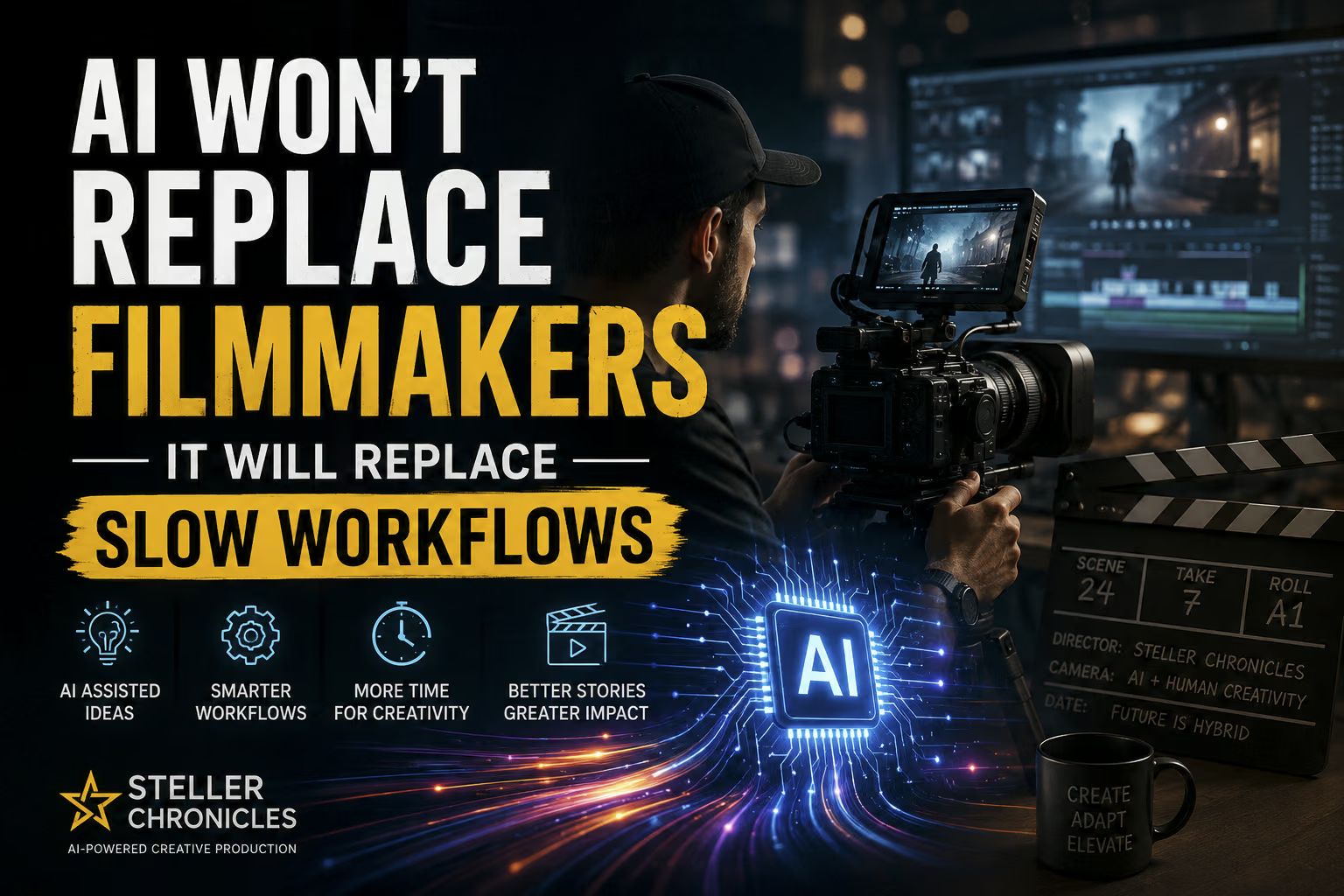
AI Won't Replace Filmmakers. It Will Replace Slow Workflows: The Future of Advertising & Brand Films in 2026
Artificial Intelligence is no longer a futuristic concept in the creative industry.
In 2026, AI is becoming an increasingly important part of advertising, commercial filmmaking, brand content, photography, post-production, and digital marketing. But one important question remains: will AI replace filmmakers?
The answer is more nuanced. AI is not replacing great filmmakers. Instead, it is changing how creative professionals work. The biggest transformation is happening inside production workflows, where intelligent tools can reduce repetitive tasks, accelerate creative development, and help teams produce more content without sacrificing strategic direction.
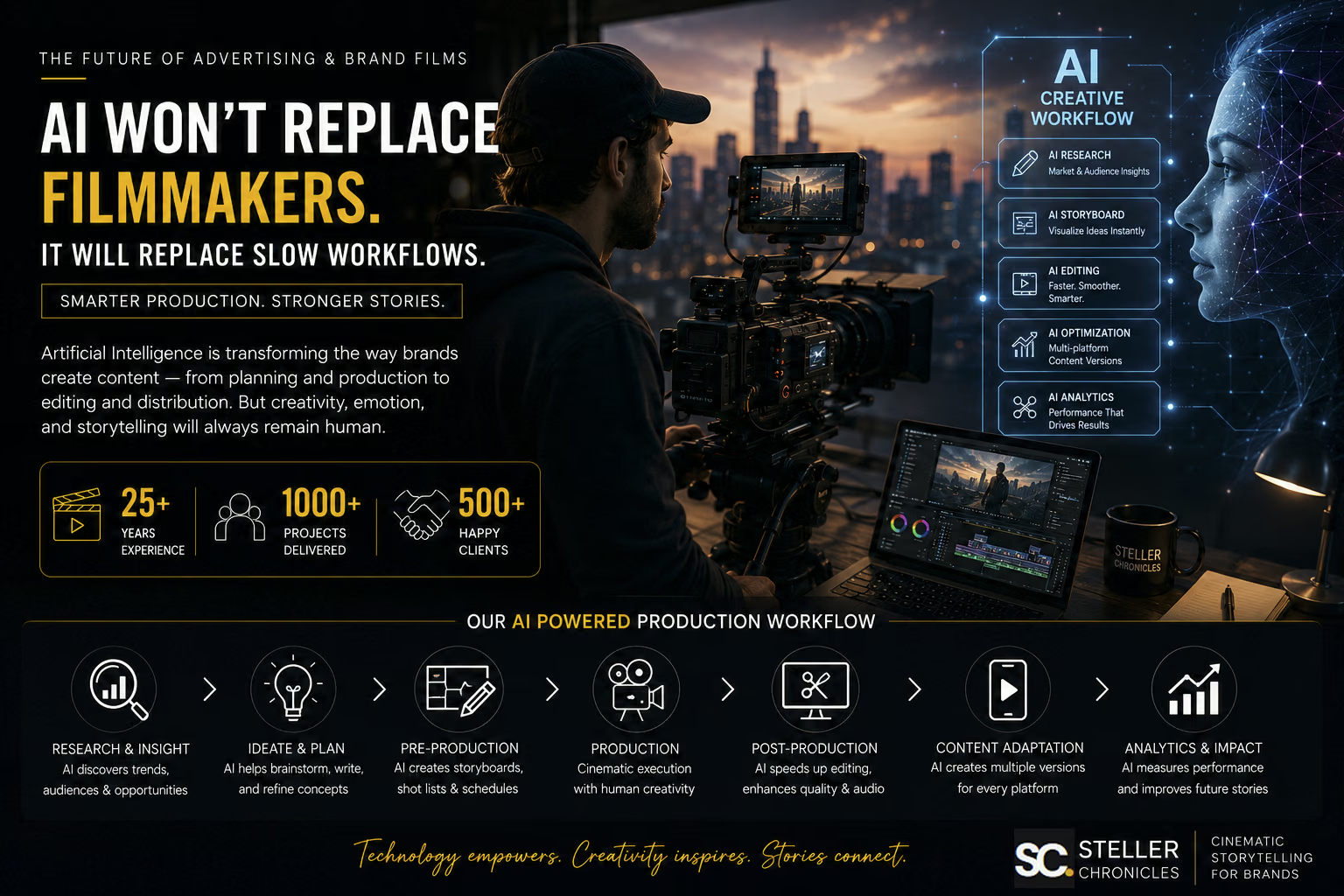
The New Era of Brand Filmmaking
Traditional commercial production involves multiple stages, including concept development, scripting, casting, location scouting, cinematography, production design, editing, visual effects, sound design, colour grading, and content adaptation.
AI is beginning to support many of these stages. Creative teams can research audiences faster, explore campaign concepts, develop visual references, experiment with story ideas, organise production information, generate content variations, and automate repetitive post-production tasks.
The result is not simply faster production. It creates an opportunity for filmmakers and brands to spend more time on the part of filmmaking that matters most: developing powerful ideas and telling memorable stories.
AI + Filmmakers = A More Powerful Production Workflow
Professional filmmaking has always depended on collaboration between directors, writers, cinematographers, editors, designers, producers, actors, photographers, and marketing professionals. AI is now becoming another tool inside that creative ecosystem.
A director still needs to understand storytelling. A cinematographer still needs to understand light and composition. An editor still needs to understand rhythm and emotion. A creative strategist still needs to understand the audience and the brand.
AI accelerates production. Human creativity gives every commercial its meaning, personality, and emotional impact.
How AI Supports Commercial Film Production
AI can contribute throughout the commercial film production lifecycle, from the first creative idea to the final campaign assets. By reducing repetitive work, production teams can focus more heavily on creative development, storytelling, direction, and audience engagement.
Pre-Production
- Audience and market research
- Creative brainstorming
- Campaign concept development
- Script development and refinement
- Visual reference generation
- Storyboard development
- Production planning
- Content strategy
Production & Post-Production
- Speech transcription
- Subtitle generation
- Translation and localisation
- Audio enhancement
- Object masking
- Background cleanup
- Content versioning
- Workflow automation
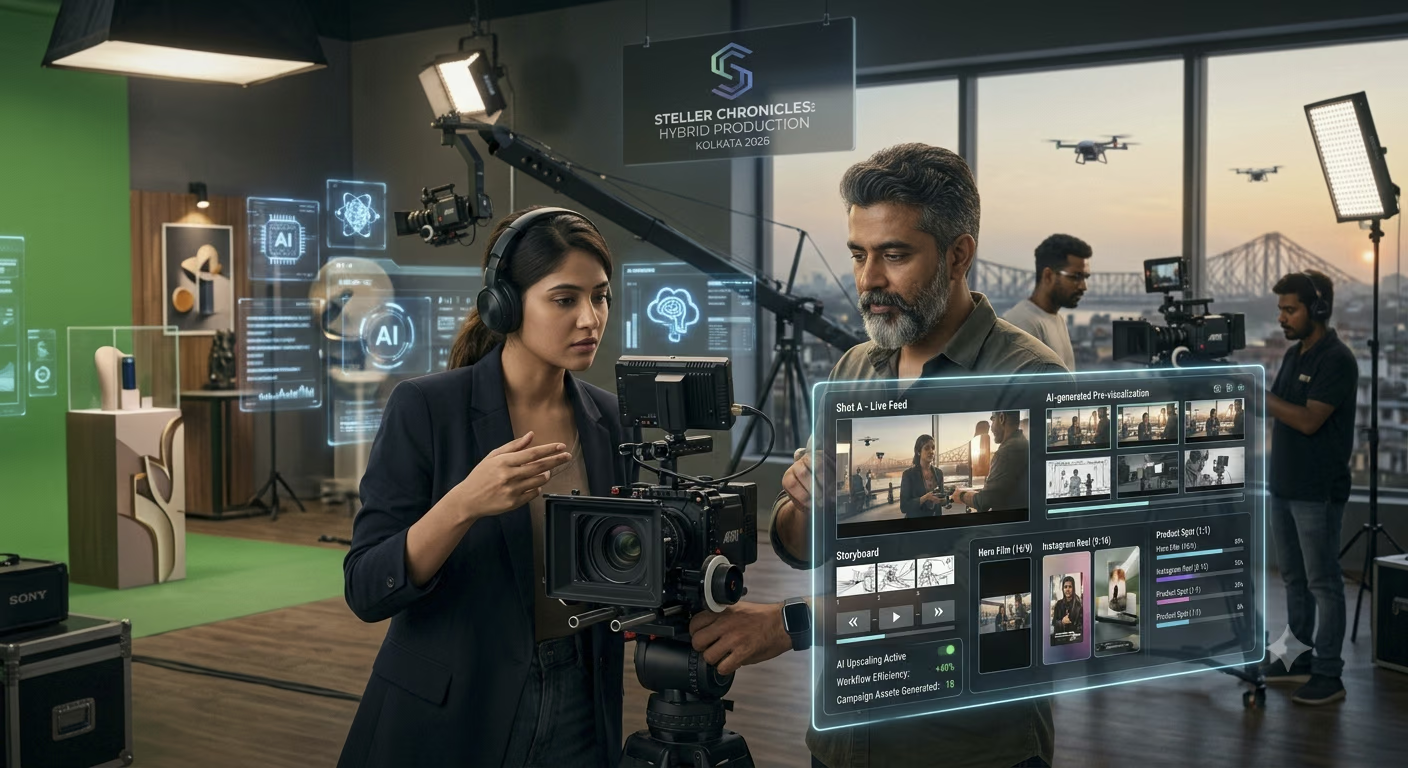
From One Advertisement to Multiple Campaign Assets
One of the biggest advantages of modern AI-assisted production is the ability to extend a single campaign into multiple content formats.
A single commercial film can become a complete content ecosystem designed for different platforms, audiences, and marketing objectives.
Long-Form Brand Content
- Hero brand films
- Corporate films
- Product films
- Brand documentaries
- Campaign films
Short-Form Digital Content
- Instagram Reels
- YouTube Shorts
- Social media advertisements
- Website videos
- Digital campaign variations
This approach allows brands to maximise the value of a production instead of creating isolated pieces of content for every platform.
The Rise of AI Product Visualization
Product advertising is another area being transformed by AI-assisted creative production. Brands can explore product concepts in different environments, visual styles, locations, and campaign directions before committing to a complete physical production.
AI-assisted product visualization can be particularly useful for concept development, advertising experimentation, campaign planning, social media content, and visual storytelling.
However, AI should not automatically replace real product photography or cinematography. For premium brands, authentic products, real environments, physical textures, human performances, and cinematic lighting remain extremely valuable.
Personalized Content for Every Audience
Modern audiences consume content across different platforms, devices, languages, and formats. AI can help creative teams adapt existing campaign assets while maintaining consistent brand identity.
Localized subtitles, translated voiceovers, multiple aspect ratios, platform-specific edits, audience variations, and content adaptations can help businesses reach broader markets without rebuilding an entire campaign from scratch.
Preparing Brand Content for AI-Powered Search
Search behaviour is evolving. Consumers increasingly use AI assistants and conversational search tools to discover companies, products, services, and recommendations.
This creates a new opportunity for brands. Video should no longer exist independently from the rest of a company's digital presence. Commercial films can be supported by descriptive titles, relevant metadata, transcripts, structured data, optimized imagery, supporting website content, and authoritative brand information.
A strong content ecosystem can improve how a brand communicates with both traditional search engines and emerging AI-powered discovery platforms.
The Future of Advertising Is Hybrid
The future of advertising is unlikely to be purely AI-generated or purely traditional. Instead, the strongest campaigns will combine both approaches.
Human Creativity
- Creative direction
- Storytelling
- Emotional intelligence
- Brand strategy
- Performance direction
- Cinematography
Intelligent Technology
- Creative experimentation
- Content adaptation
- Production automation
- Visual development
- Post-production assistance
- Content scaling
Kolkata's Advertising & Film Industry Is Entering a New Era
Kolkata has a strong creative ecosystem built around filmmaking, advertising, photography, fashion, music, design, events, and visual storytelling. AI is adding another layer to this ecosystem.
For Kolkata-based businesses, startups, fashion brands, retailers, corporate organisations, restaurants, real-estate companies, and emerging brands, modern production technology can create new opportunities for premium visual communication.
The opportunity is not to abandon traditional filmmaking. It is to combine Kolkata's creative talent with modern production technology to create faster, smarter, and more ambitious campaigns.
What Brands Should Expect From Production Companies in 2026
The role of a production company is evolving. Brands increasingly need creative partners who understand the complete journey from idea to distribution rather than simply delivering a single video.
Strategy
Understanding the campaign objective, target audience, positioning, and business goals.
Concept
Developing a central creative idea capable of connecting with the intended audience.
Production
Combining cinematography, production design, performance, technology, and AI where appropriate.
Distribution
Creating content suitable for websites, social platforms, advertising campaigns, search, and digital channels.
Responsible AI in Creative Production
AI provides powerful creative possibilities, but responsible implementation remains essential. Brands and production companies should consider authenticity, copyright, intellectual property, privacy, transparency, and human oversight when using AI-generated or AI-assisted content.
AI should strengthen a brand's identity rather than make every brand look the same. The technology is most effective when it is guided by a clear creative strategy and experienced professionals.
The Steller Chronicles AI Workflow
At Steller Chronicles, we believe the future of commercial filmmaking belongs to hybrid creative workflows that combine cinematic storytelling with intelligent technology.
Our approach brings together filmmakers, creative professionals, designers, editors, strategists, and AI-assisted production tools to create content that is visually distinctive, strategically relevant, and adaptable across modern digital platforms.
From commercial films and brand films to corporate videos, AI content production, product videos, advertising campaigns, and social media content, our focus is not simply on producing more content.
The goal is to create better content that helps brands communicate, compete, and remain relevant in a rapidly changing digital environment.
The future of commercial filmmaking belongs to businesses that combine intelligent technology with authentic human creativity.
Final Thought: AI Won't Replace Filmmakers
The more important question is not whether AI will replace filmmakers. The real question is which filmmakers and production companies will learn to use AI effectively.
Technology is changing the speed of production, but creativity remains the foundation of memorable advertising. A technically impressive video without a strong idea is still just content.
When intelligent technology is combined with powerful storytelling, cinematic direction, and a clear brand strategy, businesses can create campaigns that were previously too slow, expensive, or technically difficult to produce.
AI won't replace filmmakers.
It will replace slow workflows.
And that transformation has already begun.
Related Case Studies
See how these principles come to life in real client projects.



Ready to create something extraordinary?
Let's discuss your vision and bring it to life with world-class production.